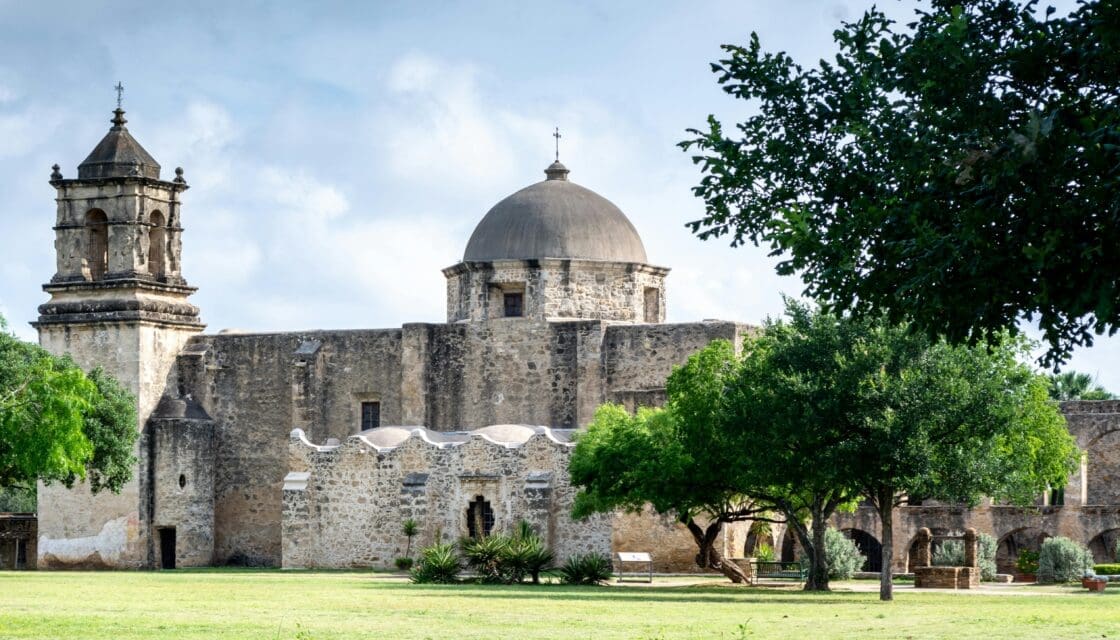
Your family doesn’t need to fight downtown crowds at the Alamo to get the real San Antonio history story. Just 10 minutes south of downtown, the San Antonio Missions National Historical Park spreads across four separate Spanish colonial missions—all completely free to visit, all National Park Service properties, and all way more interesting when you actually get to explore them without being shoulder-to-shoulder with crowds. These are the working, breathing buildings where people actually lived and worshipped centuries ago, not reconstructed tourist attractions. The park is a UNESCO World Heritage Site (since 2015), which sounds fancy until you realize it just means there’s serious historical weight here, plus incredibly clear NPS signage and free offline audio guides that actually work.
Why San Antonio Missions National Park Is Actually Worth the Trip
Here’s what makes this place land on your family’s list: You can visit all four missions in one morning or afternoon without spending a penny on admission. Not “discounted”—actually free. Free parking at every mission too. The park sits right along the San Antonio River’s Spanish colonial heritage corridor, so you’re not driving between distant sites; it’s a series of 5- to 15-minute drives following Mission Road south, which keeps kids from melting mid-visit. Unlike the massive, overcrowded Alamo in downtown San Antonio, these missions feel intentional—you walk through actual mission grounds with original walls, working chapels where Mass still happens (you can attend Saturday noon Mass at Mission San José if you want), and smaller courtyards where you’re not jostling 500 other people.
The park gives you real texture: Mission Concepción (built 1731) is the best-preserved and takes about 30 minutes to see the exterior and interior—twin bell towers, original stone structure, genuinely beautiful without feeling overly manicured. Mission San José, the largest and most restored, features the “Great Stone Door,” an ornately carved window that’s legitimately jaw-dropping if your kids care about architecture at all. Mission San Juan is smaller and quieter, perfect for young kids who get overwhelmed by too much stimulation. Mission Espada sits furthest out but rewards the drive: it has the historic acequia (Spanish irrigation canal) system still functioning, which is unexpectedly cool when you realize people used it 300 years ago and it still works. The Junior Ranger program is available at each mission—kids get a booklet, complete activities, and earn a badge. It’s free and actually engaging, not just a toy gimmick.
The real value: your kids see how Spanish colonization actually shaped Texas architecture, water systems, and settlement patterns without the aggressive tourism infrastructure. The NPS app lets you download free audio guides for offline use, so you’re not burning data while walking through mission courtyards. Most families underestimate these sites because the Alamo is so famous, but the missions are where the actual living happened. The Alamo was a mission too before it was a fort during the Texas Revolution—these four give you the full, unedited story.
What to Expect (The Real Version)
Summer heat is real here. San Antonio in July and August regularly hits 95°F+, and there’s minimal shade on the mission grounds themselves—you get some coverage in the chapel interiors and under isolated trees, but you’re mostly walking across open courtyards with stone surfaces that radiate heat. If you’re going in summer, start early (before 10 a.m.) and bring serious water, hats, and sunscreen. Spring and fall are genuinely pleasant—March through May and September through November feel designed for walking mission grounds. Winter is fine but can be unexpectedly chilly for outdoor exploration if you come from a warmer part of Texas, and the missions close at 4 p.m., which limits your window if you show up late afternoon.
Crowds are manageable compared to downtown San Antonio attractions. Weekday mornings are nearly empty. Weekends get busier, especially around 11 a.m. to 2 p.m., but you’re still never dealing with Alamo-level gridlock. School groups occasionally book missions for field trips, which you might notice as organized chaos in one courtyard but not system-wide. The park doesn’t feel rushed or commercialized, which means it also doesn’t feel like someone is constantly trying to sell you a churro or a souvenir. You show up, walk the grounds, read the placards (or use the app), and leave. That’s it.
Age suitability: kids 6 and up will actually engage with the history and architecture, especially if you have the audio guide feeding them stories about daily life. Younger toddlers are fine for short exterior walks and courtyard time, but they won’t appreciate why the buildings matter, and some will get restless quickly since there’s no onsite playground or entertainment beyond “walk around old buildings.” Stroller access is solid—all mission grounds have relatively smooth pathways, though you’ll hit some uneven stone and slight inclines at Mission Espada. A standard stroller works; you won’t need anything fancy. If your toddler is the type who’s content being pushed around while slightly older siblings explore, you’re fine. If your toddler needs constant stimulation, you’ll be managing behavior instead of enjoying history.
Logistics at a Glance
| Detail | The Info |
|---|---|
| Parking | Free at all four missions; small parking areas right at each site. Spot-finding is rarely an issue. |
| Bathrooms | Available at all four missions; they’re basic NPS porta-potty quality but clean and reasonably maintained. Bring hand sanitizer. |
| Stroller Rating | Good. Smooth stone pathways at most missions; Mission Espada has slight inclines. Not wilderness terrain. |
| Best Age Range | 6+. Toddlers welcome for walks; they won’t grasp the history. Older kids (10+) really connect with architecture and stories. |
| Admission | FREE (National Park Service site). Junior Ranger booklets are free. Verify current hours before you go; they typically close at 4–4:30 p.m. |
| Peak Crowd Times | Weekends 11 a.m.–2 p.m., occasional school group visits. Weekday mornings are nearly empty. |
What I’d Do Differently
Go Mission Concepción first, save San José for last. Concepción is the easiest 30-minute introduction—you get the visual impact without overwhelming kids, and it sets context for the bigger, more restored San José later. By the time you reach San José as your finale, kids understand what they’re looking at. Hit San Juan and Espada in between, shortest to longest distance from downtown.
Download the NPS app and the offline audio guides before you arrive. The free guided narration is genuinely good—it explains what you’re looking at without you having to read 47 placard paragraphs to toddlers who are bored. The app works offline, so you’re not hunting for cell service in a 300-year-old mission courtyard. Adults get actual historical context; kids hear stories about daily life that feel relevant.
Plan for water and snacks like you’re going to the park, not just the store. There are no snack bars at any mission. Bring a hydration pack, water bottles, maybe granola bars and fruit. You can eat in your car between missions or pack a lunch to eat in the small picnic areas most missions have. This prevents the “I’m starving and bored” crisis at Mission Three.
Skip Saturday noon Mass unless your family is comfortable in a working Catholic church service. Mission San José opens its chapel for public attendance at the weekly Spanish-language Mass, which is genuinely cool and a real part of mission life. But if your kids have never sat through a full service, a 1-hour Spanish Mass in a 300-year-old chapel might test their patience. Go if you want to experience the missions as they’re actually used; skip if you’re already managing behavior.
Nearby Eats & Pit Stops
Taqueria Guadalajara (2702 Roosevelt Ave.) — About 10 minutes from the missions on the South Side. Authentic carne asada tacos, barbacoa, and chile rellenos. Free parking, casual family vibe, not trying to be fancy. Your kids will actually eat this, and you won’t overpay.
Nicha’s Comida Mexicana (Roosevelt Ave. location) — A San Antonio institution since 1977. Serves homestyle Tex-Mex, family-run, and the Nicha’s Enchilada Plate is legitimately good. Close to the missions and actually designed for families instead of Instagram aesthetics.
Bill Miller Bar-B-Q (multiple South Side locations) — A Texas fixture since 1953. Brisket, ribs, sausage, chicken. Drive-through available if you want to grab and go, or eat at one of their South Side locations near the missions corridor. Your classic post-mission lunch that requires zero decisions.
Frequently Asked Questions
Is San Antonio Missions National Park worth it for families with kids?
Yes, if your kids are 6+, you’re willing to manage the heat, and you want a genuinely free, uncrowded history experience without the Alamo’s crowds. No, if your toddlers need constant stimulation and you’re expecting playgrounds or entertainment—this is a walking tour, not a theme park.
How long should we plan to spend at the missions?
Budget 2–4 hours total for all four if you’re moving steadily. Thirty minutes per mission is reasonable (15–20 minutes walking, 10–15 minutes sitting in the chapel or courtyard). Don’t rush; the value is in slow observation.
Do we have to visit all four missions?
No. If time is short, hit Concepción and San José—you get the full scope that way. Espada and San Juan are rewarding for families that want the full deep dive or have time to kill.
Are the missions actually part of the National Park Service?
Yes. San Antonio Missions National Historical Park is an official NPS site, which means free admission, consistent maintenance, good signage, and that audio guide app. It’s the real deal, not a roadside attraction.
Before you pack the car: Grab our free Ultimate Texas Weekend Packing List — it’s the checklist we wish we’d had for every trip. [Grab the Free Packing List]
The San Antonio Missions are the history lesson that doesn’t feel like work, and for a family in Texas looking for something free, stroller-friendly, and actually interesting, they land in a rare category. When you’re done here, the Riverwalk is worth adding for dinner or a morning walk on the same trip—it’s close enough to make a full day without feeling rushed. Or if your family wants something more active, San Antonio Zoo is under 15 minutes from downtown and a natural follow-up if you’re staying in the area and want to break up the historical sites with animals.
Leave a Reply